“You’re in the right place,” said Vicki, the receptionist, smiling.
I believed it, though it seemed almost absurd that I’d flown all the way to St. Louis, Missouri. I grew up in the United Kingdom, where healthcare is supposed to be free and equal for everyone, and spent the last eight years in New York City, home to some of the best teaching hospitals and research centers in the world. And yet, here I was, at a niche clinic a thousand miles from home, because I was hoping to do one of the most ordinary things imaginable: become a mother.
I sat in the waiting room with my husband, Nick, and my mum, who’d flown in from Scotland for moral support. On the wall were cards from patients, beautiful photos of newborn babies, heartfelt notes of thanks.
Looking at them felt bittersweet. I wondered what each mother’s journey had been like. Would I, like them, be a success story? Or might I be the exception—a particularly hopeless case?
I had known for years that I likely had a gynecological disorder that is impossible to diagnose without a surgeon cutting holes in the abdomen and examining the inside of the pelvis with a camera. A doctor had told me it might affect my fertility. But after I’d gotten married, in 2023, I got pregnant. Then I lost my baby to miscarriage.
In America, around 13 percent of women struggle with fertility issues. Up to half of couples seeking treatment for them are labeled as having “unexplained infertility” by doctors—and therefore go untreated. Many of them will try IVF, which risks being unsuccessful, because the underlying cause of their infertility has not been addressed. Revolutionary though it has been, IVF does not restore a would-be mother’s body to optimal health; in fact, IVF is often a profoundly uncomfortable experience for women, not to mention an expensive one. It’s no wonder that many women with “unexplained infertility” are left feeling that mainstream medicine has failed them, subjecting them to stressful, painful interventions, while leaving them in the dark about the mysteries of their own bodies.
But there is another way.
It’s called “NaPro Technology,” which is short for natural procreative technology. Until recently, it was seen as an obscure set of medical ideas designed for practicing Catholics, for whom IVF is morally unacceptable. The church recognizes, among other things, that human life is sacred and not ours to create in a lab.
The godfather of NaPro is Dr. Thomas Hilgers, a devoutly Catholic obstetrician and gynecologist. In 1985, he founded the Saint Paul VI Institute for the Study of Human Reproduction in Omaha, Nebraska—a medical research, education, and service center, which to this day investigates, diagnoses, and treats the root causes of infertility. NaPro also teaches fertile couples how to avoid pregnancy without the need for contraception, by accurately tracking a woman’s cycle.

While it was Hilgers’s religious convictions that inspired him to offer couples alternatives to IVF and contraception, there is nothing inherently ideological—or even controversial—about the treatments he recommends.
In fact, they might be catching on. In recent years, there has been a growing sense that fertility medicine isn’t putting women first. In the United States, IVF is a multibillion-dollar industry and, compared to Europe, remains largely unregulated. Against the background of the Make America Healthy Again movement, which has called out various so-called “medical-industrial complexes,” an increasing number of voices have argued that IVF prioritizes profits over patients.
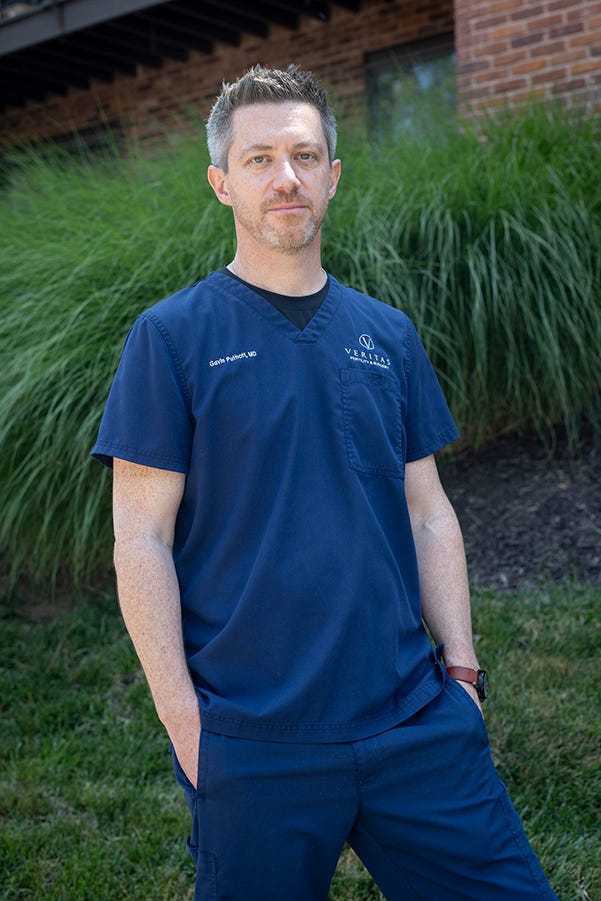
At the Saint Paul VI Institute, Dr. Hilgers trained a generation of doctors to detect, and tackle, the root causes of “unexplained infertility.” One of them is Dr. Gavin Puthoff, who went on to found the Veritas Fertility & Surgery clinic in St. Louis—whose waiting room I found myself sitting in, last August.
It’s hard to find a NaPro specialist with surgical expertise, which was necessary in my case; Puthoff is one of less than 20 in the U.S. His wait times are typically five or six months for an initial consultation and about the same again for a surgery. His patients come from all over the U.S., and beyond. “We have patients flying from Canada very frequently for surgery, from South America, from Europe, Asia, even just for consultations,” he told me recently. “We’ve had a patient from Australia.”
They do so because of Puthoff’s remarkable results: He told me that, 18 months after treatment, between 60 and 80 percent of Veritas patients with infertility will have achieved pregnancy. By comparison, the success rate of IVF is between 8 and 55 percent per cycle.
Veritas is also a lot cheaper. Even patients who pursue surgery there typically spend less than $10,000 in total. One round of IVF can cost between $15,000 and $30,000 out of pocket. For international patients, Puthoff has worked out a deal with a local surgery center to ensure up-front, affordable costs without the need for American health insurance.
In the last few months, I have interviewed half a dozen of his other patients. Most of them said they came to Veritas at a point when they’d been offered IVF but didn’t want it. Many of them said they felt frustrated by doctors who apparently didn’t think it necessary to look into their “unexplained infertility.” Whereas, to get women the answers they need, Dr. Puthoff told me NaPro will leave no stone unturned.
“ ‘Unexplained infertility’ just means undiagnosed.”
There are countless stories of women who want to become mothers but whose bodies present obstacles or mysteries that get in the way. Here’s mine.
Since the age of 20, I have suffered debilitating period pain. I didn’t talk about it much with friends, but I had a sense it wasn’t normal. Once, I nearly passed out from the pain in a public restroom. Another time, in a desperate attempt to find relief, I poured near-boiling water on my abdomen; I scalded myself, but it wasn’t nearly as painful as my cramps. Whenever I raised it with doctors back home in Scotland, and later in New York City, they seemed unfazed. They suggested I go on birth control, avoid red meat, or maybe just come to terms with the fact I may have a low pain tolerance. There was never any kind of diagnosis.
It wasn’t until I was 25, a couple of years after I moved to New York, that I first heard about endometriosis—a condition where tissue usually found inside the uterus grows outside it, becoming trapped and inflamed. I didn’t hear about it from a doctor, mind you, but over a glass of wine with two relatively new friends I’d met through a church volunteer group. They, too, had struggled with the same condition; they both recommended I visit a NaPro clinic in Manhattan.
As it turns out, one in 10 women worldwide have endometriosis—or “endo,” as sufferers often call it. Yet it is one of the most poorly managed gynecological conditions. The only way to confirm a diagnosis is through laparoscopic surgery, under general anesthesia—which is where a surgeon cuts holes in the abdomen and sends in a tiny camera. Even then, most gynecologists aren’t trained to treat it. Those that are tend to offer ablation, which effectively means taking a blowtorch to the lesions—a technique that leaves all but the most superficial endometriosis tissue intact and can make matters worse by leaving behind scar tissue.
When I saw the doctor my friends had recommended, she told me that, based on my symptoms, I likely had the disease. But as an immigrant without employer-sponsored health insurance, the idea of finding an affordable surgeon who could help was overwhelming. To tide me over, the doctor gave me a prescription for Toradol, a powerful anti-inflammatory painkiller—often given to patients after surgeries as an alternative to narcotics—which made my symptoms more manageable.
She also armed me with important knowledge: Endometriosis can make it very difficult to get pregnant. It may block or scar fallopian tubes, damage egg quality, or inflame the pelvis to such an extent that it is hostile to conception.
Though I couldn’t be sure that I had endo, I was quietly distraught at what might be going on inside my body. To many of my friends, still enjoying their 20s, the prospect of babies seemed distant and carefree; they spoke about their future kids as if having them would be easy. But for me, fertility now had a question mark hovering above it. Every period brought with it not only pain but intense anxiety about the future.
Before I got married in early 2023, at the age of 29, I warned my now-husband that we would probably need help if we wanted to start a family—and it would be best not to wait around. We agreed that if I wasn’t pregnant six months after our wedding, we would move ahead with a surgical consultation.
We were delighted when, five months into marriage, we got a positive pregnancy test: It felt too good to be true. And in the end, it was. Shortly before the second trimester began, I went for an ultrasound, and was told my baby had stopped growing. Inevitably, a few days later, I miscarried. It was the most painful experience of my life, in every way.
We don’t know whether endometriosis was a factor in our loss—the science isn’t clear on whether it increases the likelihood of miscarriage. But after six months of negative pregnancy tests, and some follow-up tests that supported the idea that I had endo, we decided to pursue surgery.
I spent months researching. The gold standard of endo treatment is not ablation but excision—where the lesions are removed by the root—and I was desperate to find a surgeon who would perform it. But these specialists often have monthslong waiting times.
Still, I was in a city renowned for world-class healthcare. How hard could it be?
Our first consultation was in March 2024, with a leading endometriosis surgeon in New York City. He was trained in excision, though he wasn’t a NaPro practitioner. When I explained that our aim was to make my body as healthy as possible in the hope of conceiving naturally, he warned that surgery could decrease natural fertility—for instance, if he removed a damaged ovary or it got roughed up while he was removing the endo. He recommended having an egg retrieval first, and creating some embryos, as a safety net.
I explained that we weren’t considering IVF. We’re Catholic and accept our church’s teaching on assisted reproduction. This seemed to surprise him. He said our approach was “limiting” and added that “whoever does your surgery will have to be very, very careful.”
I wondered: Shouldn’t that be true regardless?
Right now, thousands of American women are experiencing the uncertainty, fear, and frustration I went through while waiting to find out if I had endometriosis; it can take as many as 10 years to get a diagnosis.
Hannah, 32, another Veritas patient, had been trying for a baby for two years. She’d gone to several fertility clinics—but told me they didn’t seem interested in “figuring out what was wrong.”
She was “basically told that IVF was my only option,” but she felt as if it wasn’t a good fit for her and her husband. “We’re not Catholic, but we do come from a faith background, and we just didn’t feel like we had a good gut feeling,” Hannah said.
Her primary-care doctor recommended Veritas, and Hannah was “blown away” by her first telehealth appointment with the clinic. Dr. Puthoff’s colleague, Dr. Kristin Kalinowski, asked about her periods, and Hannah explained she had dealt with “crippling” pain since her teens. (She described it to me as “a deep, gut-wrenching physical pain.”) But she had “dismissed it as a nonissue,” because at her previous fertility consultations, her doctors had never asked her if her periods were painful—even though it’s a common symptom of gynecological issues. It’s estimated that between 35 and 50 percent of women who experience period pain or infertility, or both, will turn out to have endo. It may be even higher. One excision surgeon found in his 10-year database of treating the disease, the rate of endometriosis (diagnosed during laparoscopic surgery) was over 90 percent for patients who had both pain and infertility.
Dr. Kalinowski suggested that Hannah come into Veritas so she could physically examine her, and Hannah drove to St. Louis. “That’s when she said: ‘I can’t guarantee it, but I’m fairly certain you do have endometriosis,’ and they scheduled me for surgery.” At Veritas, they only perform excision.
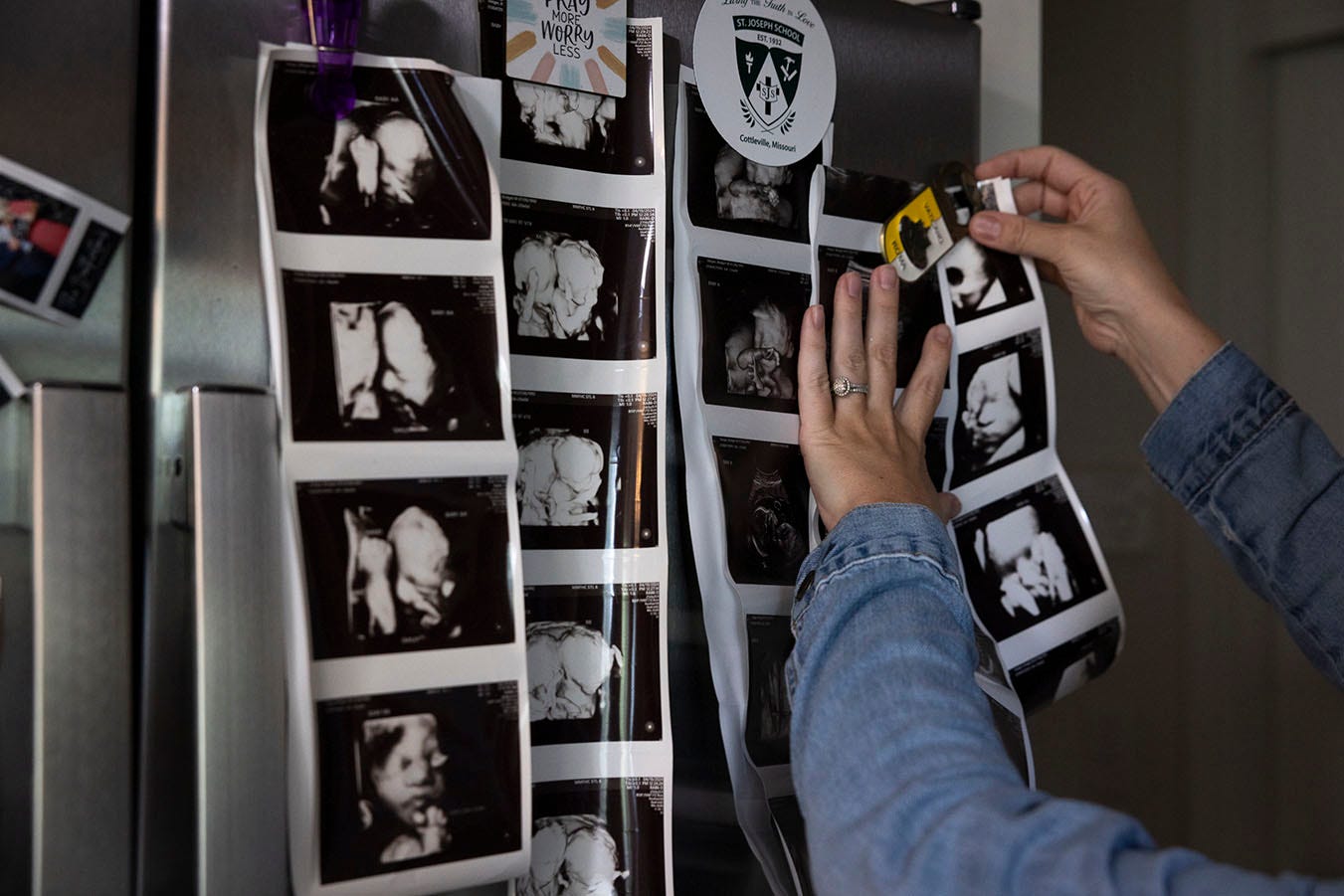
It felt like a big step, and Hannah and her husband wanted to be sure, so they visited an IVF clinic for a second opinion. Hannah said the clinic was very dismissive of endometriosis as an explanation for infertility and of excision surgery as an appropriate remedy.
“They said: ‘That’s whack medicine, and we would recommend you start IVF with us immediately if you’d like to have children,’ ” she said. “We don’t really like dramatic ultimatums or statements like that.”
It made her feel a bit more confident in Veritas.
During the surgery, Dr. Kalinowski found that Hannah did, indeed, have endometriosis, which had “primarily landed” on her ovaries and fallopian tubes and made a “twisted mess” out of the latter. She meticulously excised every lesion, leaving Hannah’s organs unscathed. That was last October. Six weeks later, to her delight, Hannah conceived for the first time.
“It was shocking on every level because I fully accepted: ‘It's going to take three to four months to recover, and then we’ll see how it goes,’ ” she said. She felt crushed when her pregnancy ended in miscarriage at 10 weeks—yet she also allowed herself “to feel really hopeful in a way that we hadn’t in the past.”
Hannah is now four months into a healthy pregnancy.
Looking back, she feels anger at the advice she was given by IVF doctors. “I feel like so many women are lied to,” she said. “They’re using scare tactics on them, like, This is your only way to have a child, as opposed to, Let’s address what’s wrong with you.”
Far from being the “only way,” Dr. Puthoff told me that telling a couple with “unexplained infertility” to get IVF is like spinning “a roulette wheel where you’re hoping maybe it can help to result in the pregnancy.”
“You haven’t made anybody healthier in the process. You haven’t gotten anybody answers.”
The surgeon I saw in New York ordered an MRI. That’s how I discovered that I might have a hydrosalpinx—a kind of blockage in the fallopian tube, which can be caused by endometriosis. Already stressed, I found out that the standard treatment for damaged tubes is to remove them—which makes it impossible to conceive without IVF.
Was there no way to heal my reproductive system?
It was then that my friend in Virginia, who had struggled with infertility for five years before being diagnosed with endometriosis, told me about her doctor in St. Louis. Dr. Puthoff is one of the relatively few surgeons in the country who specializes in unblocking fallopian tubes. He would later tell me that most fertility clinics don’t bother doing it, because removing the tube is easier from the surgeon’s perspective—and many “have the thought that they can always do IVF,” which enables women to get pregnant without an egg traveling down the fallopian tube.
But is this a good enough reason to remove a salvageable organ?
“Almost every week, we see patients who have had a laparoscopy where they were told the tube looked abnormal, so it was taken out,” Dr. Puthoff said. “And when I would go back and look at the operative photos, it is not abnormal. It’s not perfect, maybe, but is totally fixable.”
The NaPro approach, he said, is: “If you fix the tube, you’re restoring natural fertility.”
After one telehealth appointment, my husband and I were convinced we’d found the right man for the job. So we booked an Airbnb in St. Louis, plus a car and our flights, adding “wheelchair assistance” for my return journey. As we traveled to meet Dr. Puthoff for the first time, I tried to focus on how many women he had helped, including my friend in Virginia.
She was pregnant at last, after seven years of infertility.
For Valerie, 38, from Michigan, IVF felt like the last resort.
She knew it was a grueling process. Women endure multiple injections, often experience bloating, hormonal swings, a lot of stress, and even risk serious side effects, such as severe ovarian hyperstimulation syndrome. And all without the guarantee of a baby. But in the end, she did it.
She’d tried intrauterine insemination several times, where the sperm are placed directly into the uterus, usually via syringe. Then in 2015, a nurse at her local fertility clinic suggested she have a laparoscopy, to assess for endometriosis. The surgeon identified and treated the disease using ablation. Valerie conceived naturally a few months afterward, but miscarried. After that, she and her husband tried again for another two years, with no luck.
That’s when they made their first attempt at IVF, which “failed miserably,” she said.
Valerie did not respond well to the medication meant to stimulate her ovaries. “I didn’t really produce that many eggs,” she said. After that, only one of her embryos survived long enough to be transferred. It did not result in pregnancy. “It was pretty crushing, because you just spent $15,000 and are literally walking away with nothing,” she said.
They tried a second egg retrieval at a different IVF clinic, but the results were similarly poor. After taking higher doses of estrogen, Valerie did a third egg retrieval which resulted in “one really good embryo,” which they were able to transfer. Her longed-for baby was born in June 2018.
“We were incredibly thankful to have our son,” said Valerie. But when she and her husband began thinking about having another child, she knew she couldn’t bear going through IVF again.
“It was kind of traumatizing, honestly, to beat your body so hard, and it was a lot of money,” she said. “It’s just so stressful. You’re tied to this schedule, it feels like your body’s been hijacked by your doctor and forced into performing in a way that really isn’t designed.”
And so, she found her way to Veritas—where Dr. Puthoff told Valerie that, because her endo had been treated by ablation, it had likely grown back. Surgery confirmed his suspicions, but it also allowed him to treat her: Dr. Puthoff excised Valerie’s endometriosis, as well as scar tissue that had been caused by the original surgery, and three months later, Valerie conceived her second child, naturally.
NaPro, she said, ended up being “way less time and stress and anxiety” than IVF. On top of that, they paid less than $9,000 for all of Dr. Puthoff’s interventions—including appointments they made when they needed help having a third child—whereas IVF had cost them $30,000 out of pocket. “Not that I want to equate my children with monetary numbers,” said Valerie.
The most important thing, she said, was that Veritas focused on restoring her health, whereas IVF felt like bullying her body into submission.
“NaPro requires an understanding that your body isn’t a machine, and you can’t just force it to do something and that it has to heal and that takes time and patience,” Valerie said.
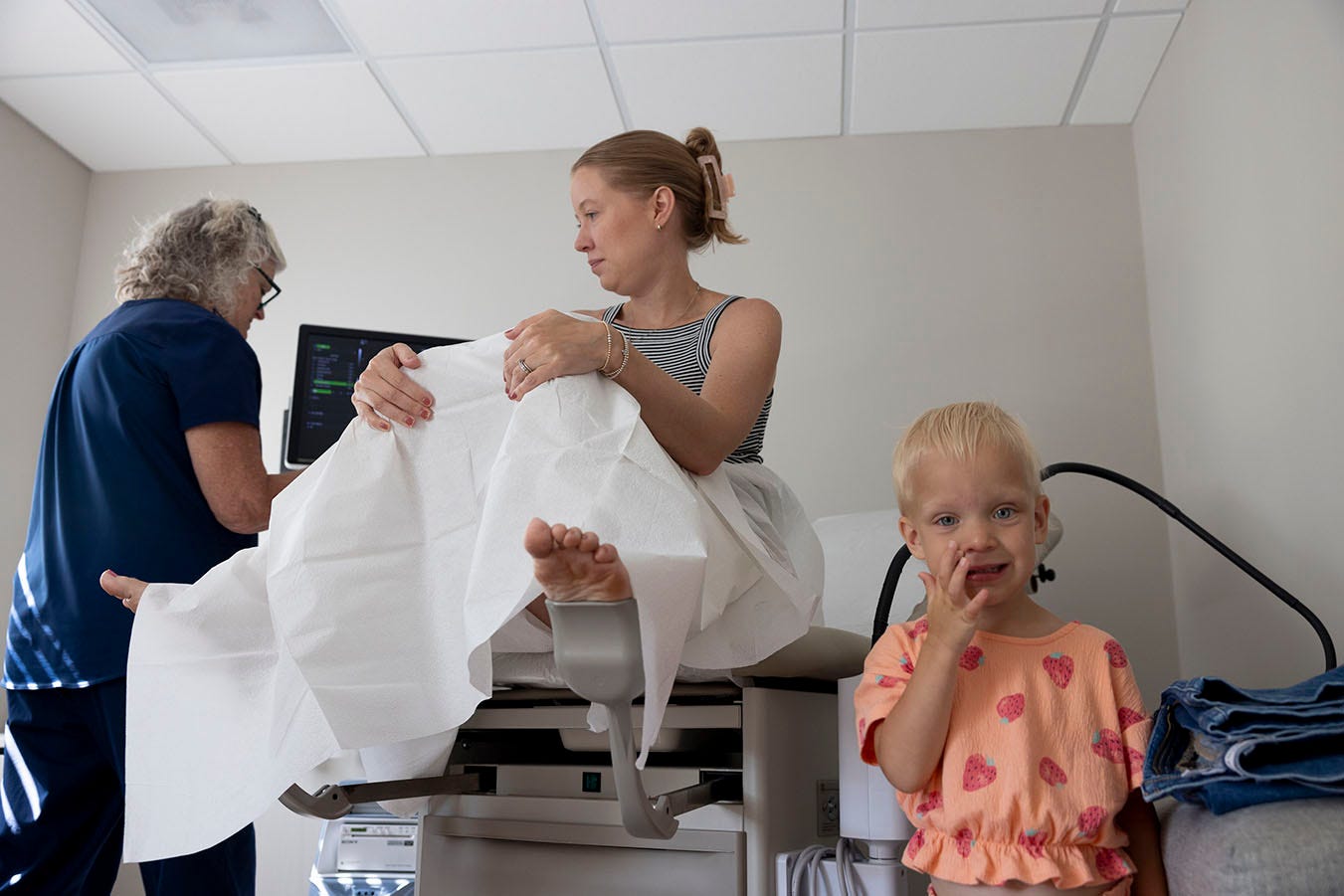
The day before my surgery, we visited the Veritas clinic to meet with Dr. Puthoff. I also had an ultrasound, which was hard: The last one I’d had was followed by the news that our baby had died in my womb, in what’s sometimes called a “silent” or “missed” miscarriage.
I mentioned this to the sonographer as I undressed.
“I know, I’m so sorry. I read that in your chart,” she said.
Afterwards, I had what’s known as a selective hysterosalpingogram—where Dr. Puthoff fed a small wire through each of my fallopian tubes, one by one, to check for blockages. Sometimes this procedure, which can dislodge mucus or debris, is the only intervention a patient needs to get pregnant naturally—but most fertility clinics don’t offer it.
I woke up the next morning, the day of my surgery, feeling a strange mix of dread and excitement. Was I finally going to get relief from years of debilitating period pain? Would the prognosis for fertility be devastating?
Based on my MRI results, it was possible that the whole right side of the pelvis was badly damaged by the disease. And so I had to sign a consent form in case Dr. Puthoff needed to remove my right tube and ovary, on top of excising all the endometriosis. When he came in to answer any last questions, he assured me that he would only do that if truly necessary.
Then I was wheeled through to the brightly lit operating room. There was a small crucifix on the wall. Staff in scrubs—nurses, a resident, the anesthesiologist—headed to their stations. I climbed onto the operating table, tears welling in my eyes. The last thing I remember before the general anesthetic knocked me out was Dr. Puthoff putting his hand on my shoulder, saying: “We’re going to take great care of you.”
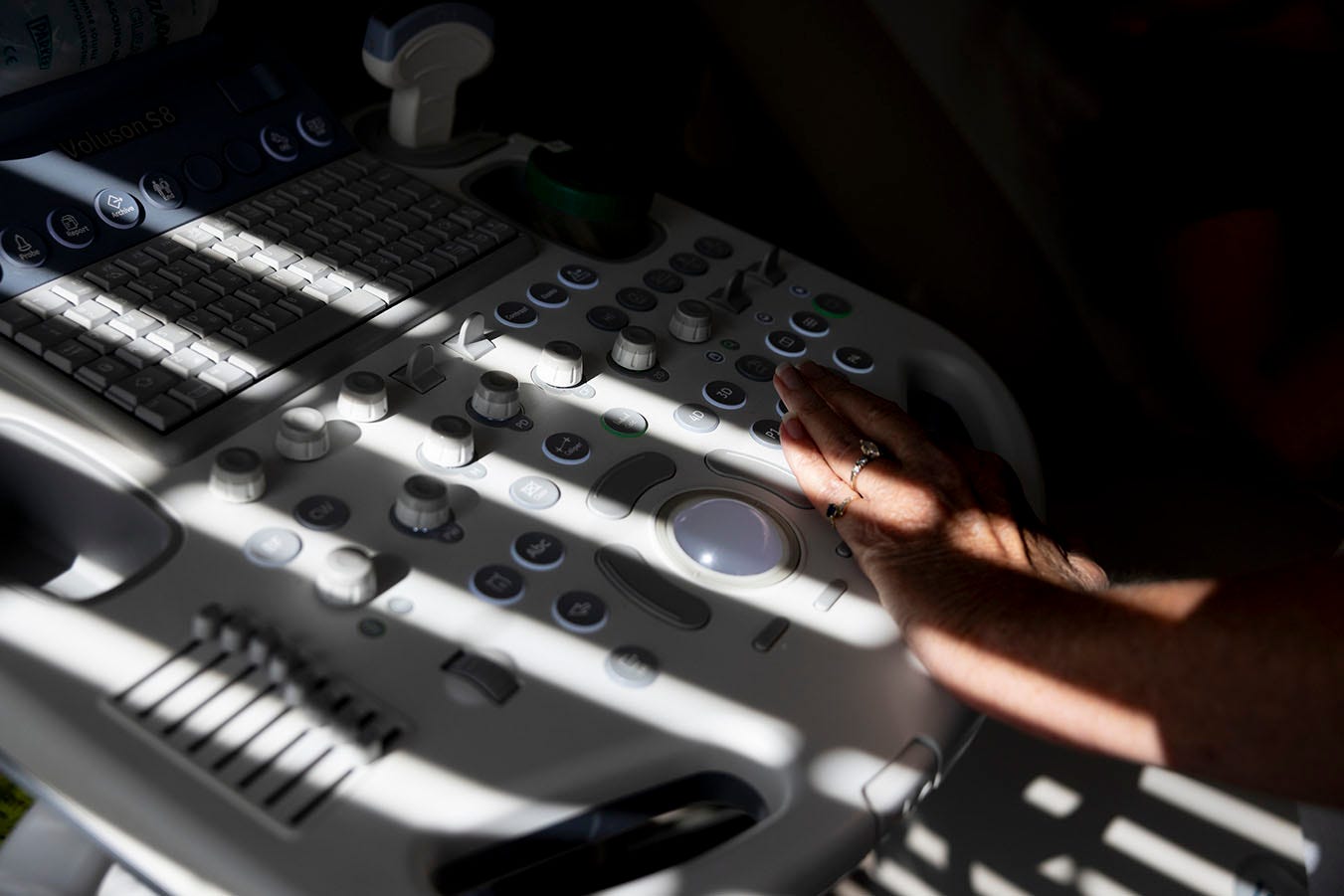
Not all of Dr. Puthoff’s patients require surgery; some just require a little time.
Amber, 34, assumed that when she came off birth control in 2021, pregnancy would quickly follow, but after a year, she was starting to fear that she’d never become a mother. Like so many women, Amber went to a fertility specialist and was told IVF would be the best option. But she wasn’t convinced. A quick Google search brought up Veritas—Amber lives in St. Louis, so she’s local—where a few tests and one appointment with Dr. Puthoff yielded an explanation.
Amber has a mild case of polycystic ovary syndrome—a condition affecting up to one in 10 women, which causes hormonal imbalances and can interfere with ovulation. She also has a progesterone deficiency that was making it hard for embryos to implant in the uterine lining. Dr. Puthoff prescribed her letrozole, an ovulation-inducing drug, and a supplemental progesterone to help with implantation; then monitored her cycle with an ultrasound series to ensure each intervention was correctly timed.
Amber’s son was born in March 2023, her daughter in October 2024.
“Not for everyone, but for a lot of women who are told that it’s hard or impossible, it can be so simple,” she said.
For others, it can be so complicated.
“The best part about Veritas is that they don’t just put a Band-Aid on your problems,” said Bridget, 32, also from St. Louis. “They are digging and figuring out all kinds of things that are going on with your body and trying to work to heal them.”
After years of struggling to conceive, experiencing recurrent miscarriages, and having ablation surgery for endo, Bridget—who’d always dreamed of having a big family—had nothing but negative pregnancy tests. “I was in the most depressed state of my entire life,” she said. “I never had felt any of these things before. Like, literally, just the slums of your life.”
Bridget was desperately searching the internet for answers when she came across Veritas, right in her backyard. When she met Dr. Puthoff, “He didn’t say, You’re going to be able to get pregnant. But he did say, ‘I’m confident that we’re going to be able to figure out what’s going on.’ ”
He was right. Extensive evaluation concluded that there were multiple factors contributing to her difficulty in achieving and sustaining pregnancy, including endometriosis, inflammation of the uterine lining, a genetic blood-clotting disorder, low progesterone, and an overactive immune system. Dr. Puthoff treated each symptom carefully, culminating in surgery.
Her very first cycle after the operation, she got a positive pregnancy test.
It was Christmas Eve. She called Veritas’s after-hours hotline, so that the staff could order a prescription for progesterone supplementation. “Within half an hour, my phone’s ringing, and it’s a random number, so I answer it,” Bridget said. “It’s Dr. Puthoff himself from his home on Christmas Eve with his family, calling me to congratulate me and to reassure me that he already put in the order.”
Dr. Puthoff told me that he gets “just as excited about somebody calling with a positive pregnancy test as about anything. It’s that first call that’s just so exhilarating—to know that the treatments that we provided have helped somebody.”
He himself is a father of seven—when we spoke, his wife was pregnant with their eighth child—and he told me that his kids are part of what motivates him. He wants “other couples to be able to have what we have.”
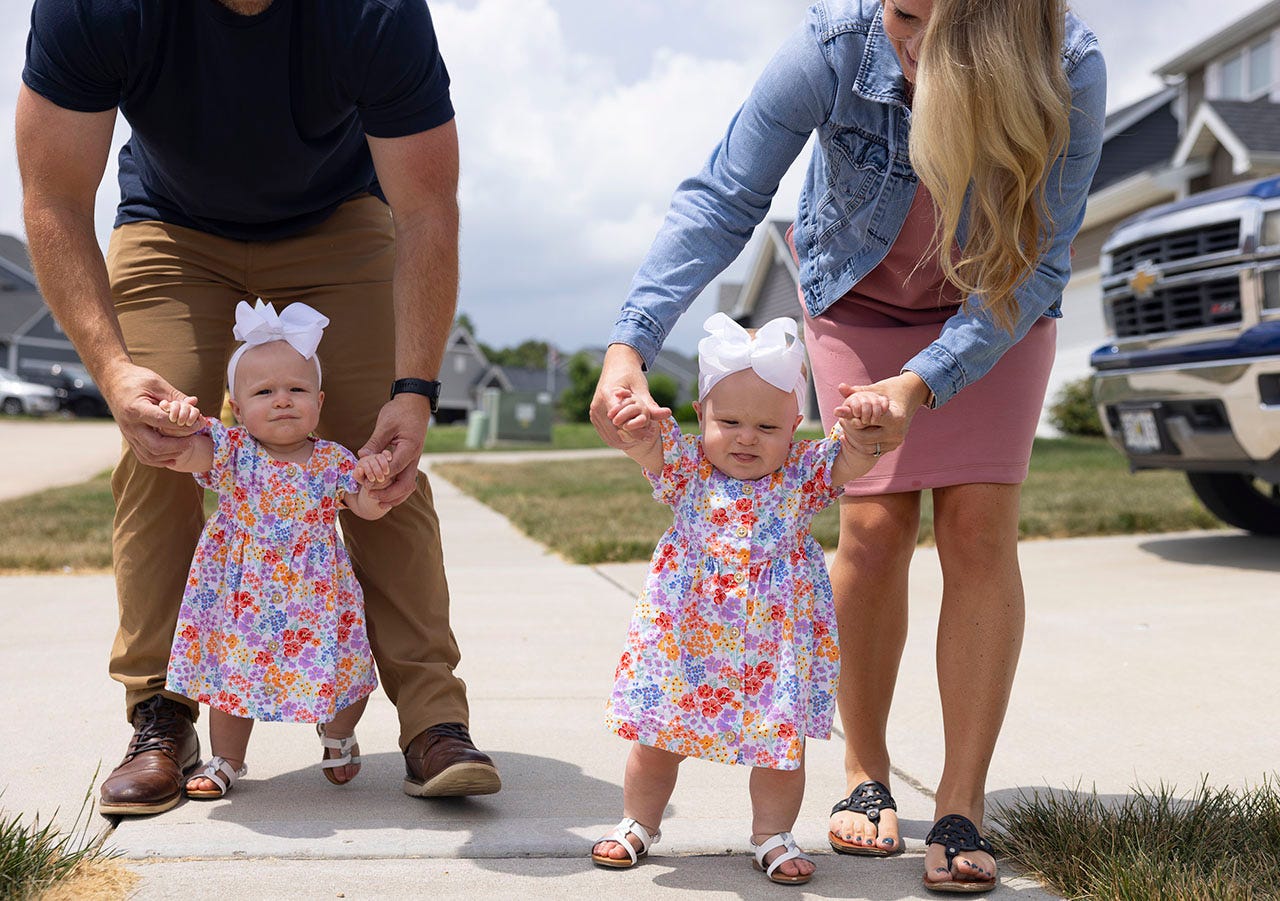
At her first follow-up scan, Bridget learned that she was carrying twins. Her daughters, Lily and Grace, were born in August 2024.
I woke up in a recovery room to a nurse handing me ice chips. Once I was less groggy, she wheeled me into my own room. All I could think about was whether I still had both fallopian tubes—the first thing I said when Nick and my mum came in to see me was: “Do I have everything?”
I did.
Before I woke up from the surgery, Dr. Puthoff had gone over the pictures from inside my pelvis with my mum and husband, which they had videoed. The diagnosis was stage III endometriosis. Dr. Puthoff had excised lesions and endometriosis scar tissue from both pelvic walls and removed a very deep pocket that had been pressing on my intestine. But my reproductive organs were unscathed; both tubes and ovaries were normal. What we thought was a hydrosalpinx, based on the MRI, turned out to be a fluid-filled “deep cave” of endo, as Dr. Puthoff described it.
My first thought after seeing the pictures was: Thank God I wasn’t crazy. Another of my fears, aside from waking up with missing organs, was the opposite problem: Waking up to be told everything looked fine, and it must all be in my head. Endometriosis is an ugly disease. Seeing the deep, angry sites of scarring and inflammation, I felt vindicated: I didn’t just have a “low pain tolerance,” as doctors suggested to me for years.
My second thought was how painful it would have been to carry a baby to term with all that going on. Endometriosis can make pregnancy and childbirth excruciating. I understood now why my miscarriage had been so physically agonizing.
The surgery had gone extremely well. Not only had Dr. Puthoff excised all of the disease, he had pinned my ovaries away from the inflamed areas with dissolving stitches, and treated the whole area with a solution to prevent the formation of scar tissue. My overwhelming emotion was relief. Sore and a little high on painkillers, I was traveling back to New York with newfound hope, not only for future pregnancies, but for carrying them in a healthy and pain-free state. It was the best possible outcome, the one we had been praying for.
It took a month or so, and a follow-up course of antibiotics, for me to fully feel the benefits of my surgery. The nagging pelvic pain I’d been dealing with was gone. I felt healthier than I had in years. Dr. Puthoff had warned that the first couple of periods after surgery could be just as painful, but that I should start to notice the difference by the third cycle. I never got the chance to find out. Two months after surgery—and over a year after our miscarriage—my husband and I learned that I was pregnant.
We didn’t tell people right away. Pregnancy after loss feels less innocent, more cautious. But by the time we’d heard the heartbeat and my first trimester symptoms had kicked in, I emailed Veritas to let them know. The response came quickly: hearty congratulations on behalf of the whole team.
What women’s bodies are capable of in producing new life is nothing short of miraculous. But even when we face tremendous obstacles, I have learned how resilient and responsive we are to proper treatment.
It’s a travesty, then, that so many of us aren’t given the care we deserve.
Pursuing surgery with Dr. Puthoff was a gift to myself—at the very least, I had taken steps to address the pain that had hampered my life for over a decade. But it was also a gift to my daughter—giving her the healthiest passage into life that I could offer.
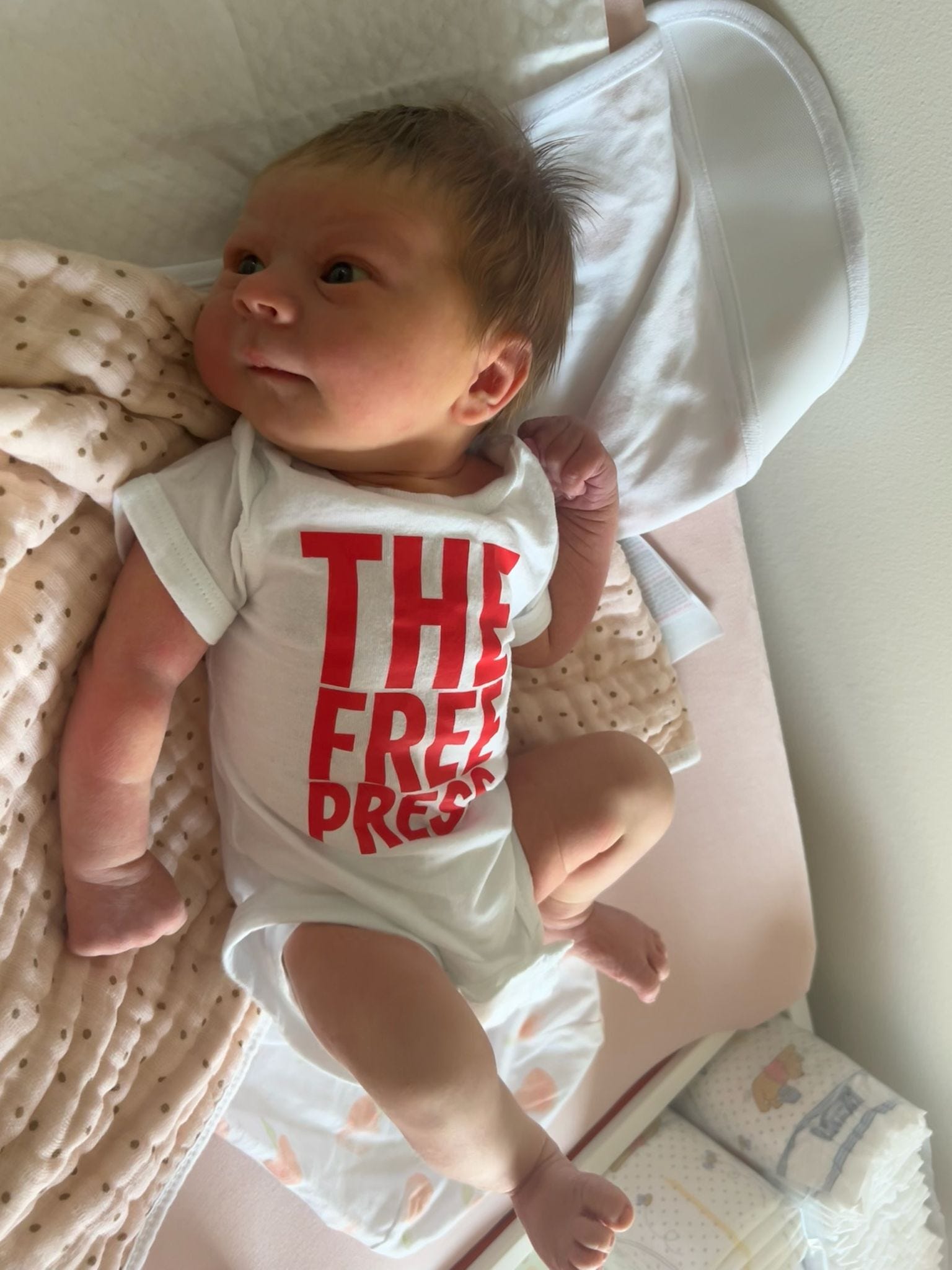
My baby was born this week, on Tuesday, July 15.
She’s four days old today.